Tonight's post is actually a two-fer. As per my last post, after a short two months of ownership I sold the blue Mercedes 300D. I came out so far ahead (financially speaking) on that car that it made sense to sell it when I did. At that point, I figured it would be a good idea to keep a third project car in rotation with the van and the Subaru, and to keep flipping them for a profit. It seemed like a fun and productive way to spend my spare time.
Although I figured that W123 Mercedes diesels would be the easiest route, I decided to keep an eye out for Volkswagens, also. Aside from my experience with the Vanagon, I had a lot of friends with Volkswagens that I knew I could call if something got confusing for me (actually, I still have those friends - most of them have simply moved on from Volkswagens at this point).
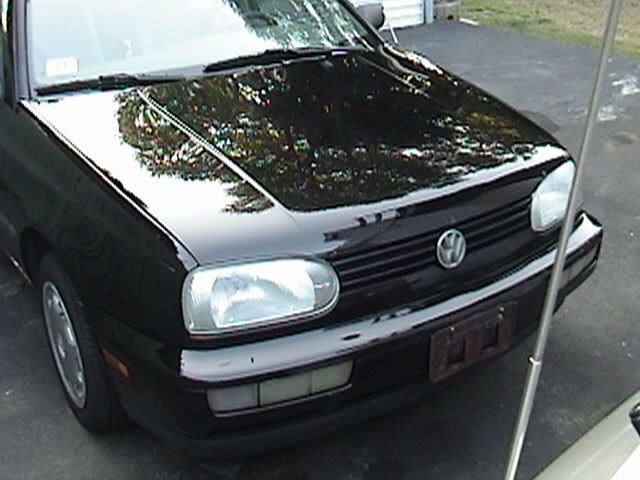
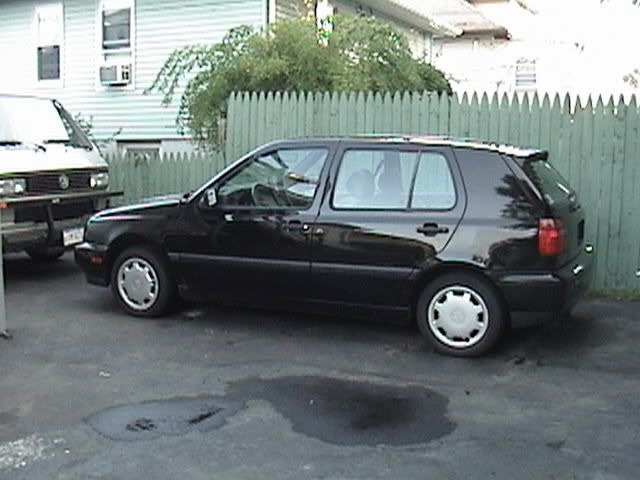
It wasn't long before I found my next project candidate. A 1994 VW Golf popped up on Craigslist one day right near my office. The asking price was $500. I went right over after work to see the car. The seller figured the car was pretty much on its last legs, and needed to sell it before the weekend in order to make a payment on his brand new Toyota. To my eyes, the Golf didn't look too bad. Aside from needing a wax job, missing a hubcap, a cracked exhaust pipe, and needing front brake pads, it looked pretty solid to me.
I took it for a spin around the block, made an offer, and $300 later, the Golf and I were on our way home. The car was in such good shape that with a little cleanup and a little wrenching, it came together quickly, and ended up pretty respectible looking to boot.
I ended up liking the car so much that I used it as my daily driver for the better part of three months. Of course, it wasn't alone in the driveway - not by a long shot.
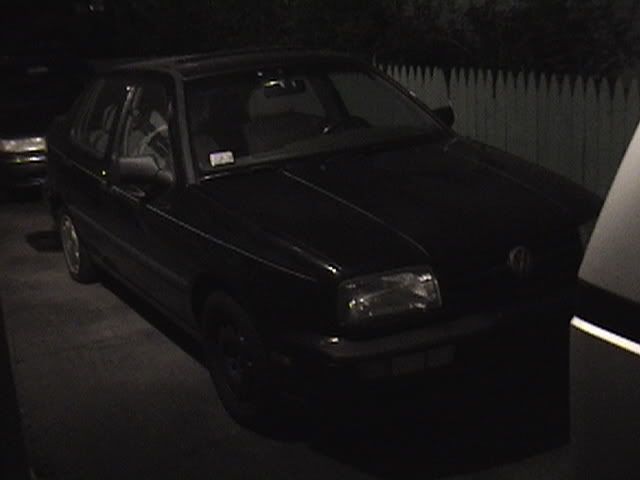
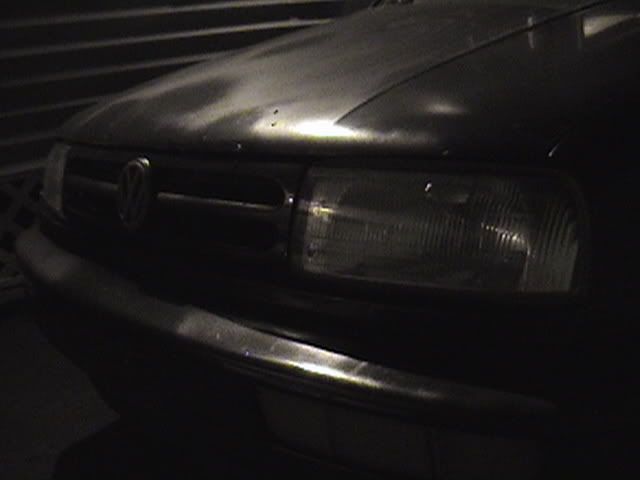
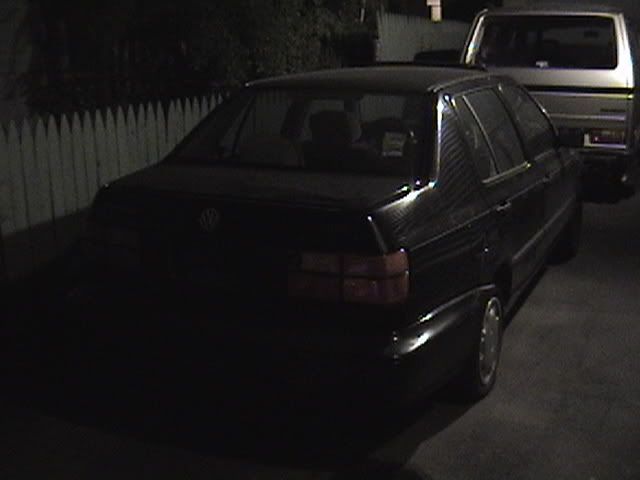
Two weeks after I bought the Golf, I saw an ad for a $300 1994 Jetta. I did a little bit of bargaining, and $250 later, the Jetta was home, which included the tow.
The Jetta wasn't quite as good looking, or in quite as good shape. It was also automatic, which I didn't care for. But, for $250, I wasn't going to complain too much. I rolled the Jetta into the garage, and planned to work on it after I'd sold the Golf.
Late October came quickly, and I needed to get rid of at least one of the cars before the winter. The Golf was driveable, so I put it up on Craigslist, at what I thought was a fair price. It was then that I learned a lesson - no matter what the condition, nobody wants to pay the supposed book value on a Volkswagen. I dealt with a lot of tire kickers and people who were just generally wasting my time. I relisted the car a few times, dropping the price gradually. The jackass lowballers were starting to wear me down.
In the end, I even offered to throw in the Jetta for free as a parts car if I got full price on the Golf. Still, no takers.
Finally, I ended up finding a buyer. I sold the car to a younger VW enthusiast who needed to retire his 1994 Jetta with baseball-sized holes in the shock towers. I didn't get anywhere near what I wanted for the car, but I had fun driving it, and did actually come out a bit ahead.
Once the Golf was out of the way, I listed the completely-untouched Jetta on Craigslist for $400. This represented the purchase price, as well as the tax and title fees. The car didn't need any major work, but needed all maintenance items. It took me a month to sell the Golf, but only a few hours to get rid of the Jetta.
At this point, I swore to myself that I'd never own another project Volkswagen. Selling the Golf proved to be about 100 times more hassle than I thought it would be. Damn shame, too. It was a great little car.
As I mentioned in my previous post, when I bought the 300SD, I was living in Waltham. About a year after that, I moved out to Worcester. This made my commute by bike no longer an option. While I do have a commuter rail option, the schedule doesn't work well for me, and compared to driving, it's more expensive. So, as soon as I moved, I switched to commuting by car.
I moved in the early summer, and spent my first months commuting in the 300SD. I didn't like driving such a well-kept (and big) car into the city everyday, but I didn't have any choice other than the Vanagon, which would use more fuel. I knew the winter was approaching fast, and that since both of them were rear wheel drive, that neither the Mercedes nor the Vanagon would be a suitable car for the snowy, icy Massachusetts winters.
I decided that adding a third car to the fleet was my best option at the time. I'm planning to keep the Vanagon forever, and I was too attached to the Mercedes to let it go, either. So, I started looking at my options. I knew I didn't have much of a budget to pick up a front or all wheel drive car. My new roommate at the time had a lead on an old, low-mileage Ford Tempo. For whatever reason, I never went to look at it.
The first car I remember looking at was an early 1990s Nissan Pathfinder. It was in my price range. I went to check it out one night after work. The engine didn't sound quite right, the 4WD was difficult to engage, and the frame had large, dangerous rust holes. I decided to pass on it.
Being a Vanagon owner, I'd been doing research for the past few previous years on engines to use for an eventual transplant. Most Vanagons will need an engine replacement. Many owners opt to install something other than the notoriously leaky stock 2.1L waterboxer. In the course of my research, I learned about Subaru engine transplants. Now, having moved, I suddenly realized that an AWD Subaru would probably make a good commuter car for me.
The next car I looked at was a Subaru Legacy sedan. I didn't know much about them at the time, so I brought along my roommate at the time, who knew a little more about them. The car was OK, not spectacular. In the end, it came down to price and condition. It just didn't seem to have enough value in it.
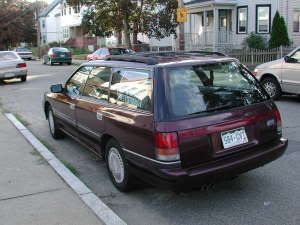
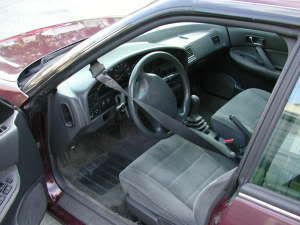
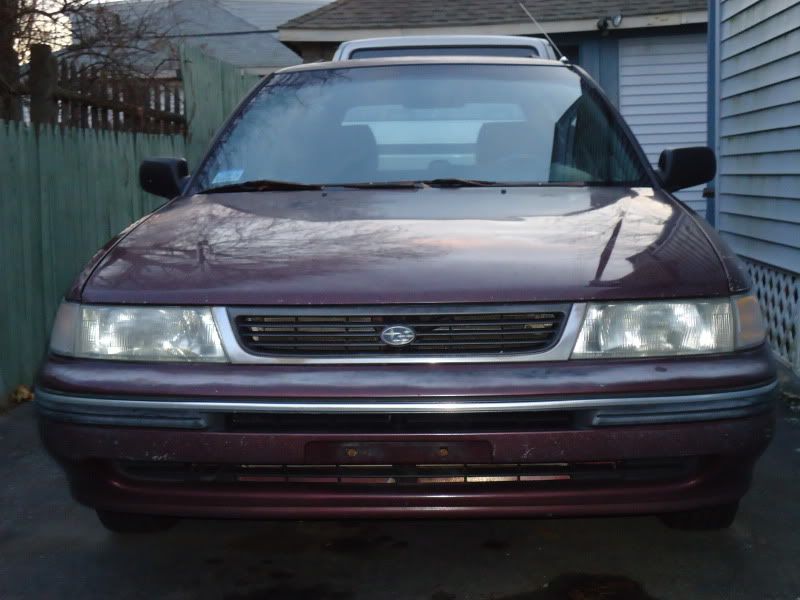
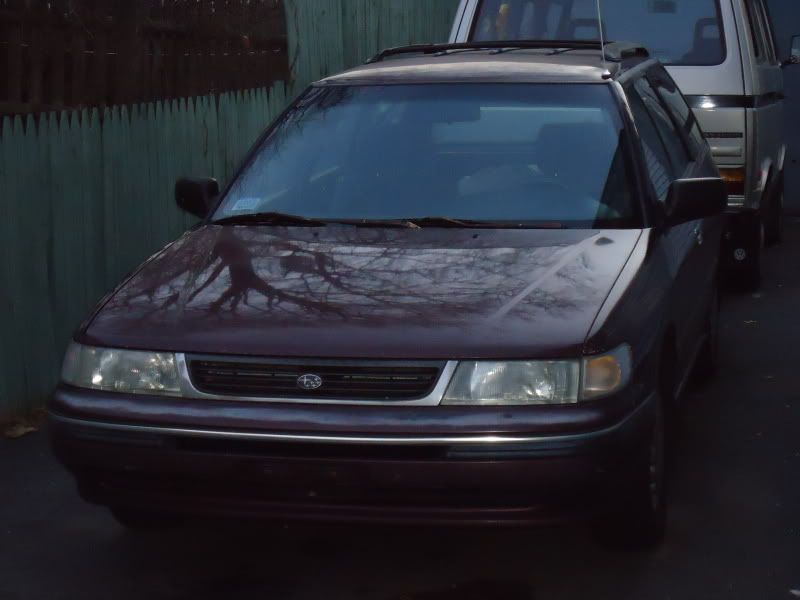
Finally, I went to look at a 1994 Legacy station wagon. The car had recently been brought to Massachusetts by a couple who moved from Colorado. The car had more miles on it than I'd hoped (204,000), but had been meticulously maintained by its previous owners. It didn't look perfect, but ran almost perfectly. Plus, it was in my price range. I made an offer, and returned two days later, after work, to pick it up. For what I paid, I just hoped the car would last me one winter, and then I could consider possibly picking up a lower-mileage car the next year.
(seller's photos, copied and saved from the original Craigslist ad)
The car soon became my winter car. The only repair it needed immediately was a clutch. The original was almost completely worn out, so I had that done about two months after I bought the car. By spring, I realized that even though the snow was gone, I was still primarily driving the Subaru, as I liked it so much. I hadn't counted on liking the car, but fell in love with it quickly. I'd been driving for a decade, but this was the first car I'd owned that could handle winter travel safely.
In the summer of 2007, I had an axle boot fail on me, and had my mechanic (I'd finally found someone half-reliable at this point) replace the axle shaft to the tune of $300 (parts and labor). I realized that with insurance to pay on three cars, along with inspection and registration, not to mention maintenance and repairs, that having three cars was expensive. I hoped it would be a long while before the next repair. It wasn't.
Not long after the axle, I heard a new scaping noise when braking, and realized that my rear brake pads were worn out. I panicked, as I'd never had a brake job done by a mechanic that turned out to be inexpensive. I realized that if I wasnte to keep three cars, I'd need to step it up in terms of doing my own repairs. I did some basic research and decided to try and tackle the brake pad replacement on my own. Armed with a repair manual, I budgeted a whole day to do the job, as I'd never touched brakes before in my life.
From the time I raised the car up on jackstands to the time I lowered it back onto its wheels, the entire repair took me less than 45 minutes. Of course, I still had to test the brakes. I put the car in gear and backed down the driveway toward the street. Then I hit the brakes. The car stopped correctly and silently. A quick road test later and I was good to go. From that point on, I attempted (and succeeded) pretty much all my own repairs, including, but not limited to replacing the Legacy's timing belt, and then the transmission, when it failed.
Four years later, the car that I hoped would last me one winter had survived (and thrived in) four years of salt belt commuting. At this point, the car had 292,000 miles and I was starting to plan how I'd mark the occasion when the car rolled over to 300,000. That didn't happen. In October, 2010, the Legacy died suddenly on the Masspike on the way in to work. In retrospect, there had been a strange, momentary noise when I'd started the car that morning.
I had it towed home, thinking the fuel pump had failed. I spent weeks of evenings doing diagnostics to no avail. The car had fuel, spark, and seemed to crank just fine. It just wouldn't start. I checked sensors. I did everything I could, but the car wouldn't start. Here's a (long) video I did (my first Youtube foray, actually) to solicit help from online. It shows the car cranking, but not starting.
Since it was taking so long to fix, I lost hope and bought another car (a 1990 Volkswagen Jetta GL diesel) as a commuter. I was going to ship the Subaru off to a junkyard, but upon some advice I got, I did one last check on the Subaru and found that an idler had seized and the timing belt had jumped, but not broken. I replaced the belt and idlers, and the car returned to perfect working condition. See here:
Of course, this was AFTER I deregistered it. So, I flipped a coin and decided to keep the 200,000 mile Volkswagen instead of the 300,000 mile Subaru (bad decision - I'll get to that in a later post). I put the Subaru back on Craigslist, where I'd found it.
A few days later, it sold for pretty much book value, due to all the work I'd done on the car when I'd owned it.
This car was important to me mostly because it was the car I learned the most from, in terms of hands-on experience. I know it's still out there, and has probably passed the 300,000 mile mark flawlessly with its new owner.