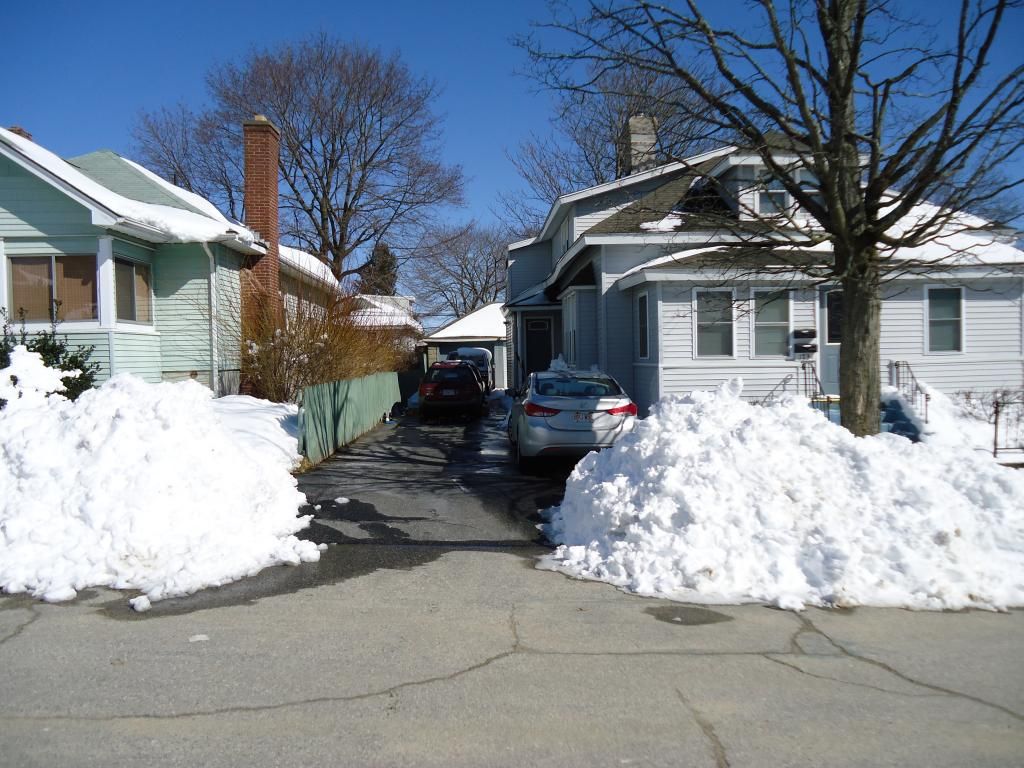
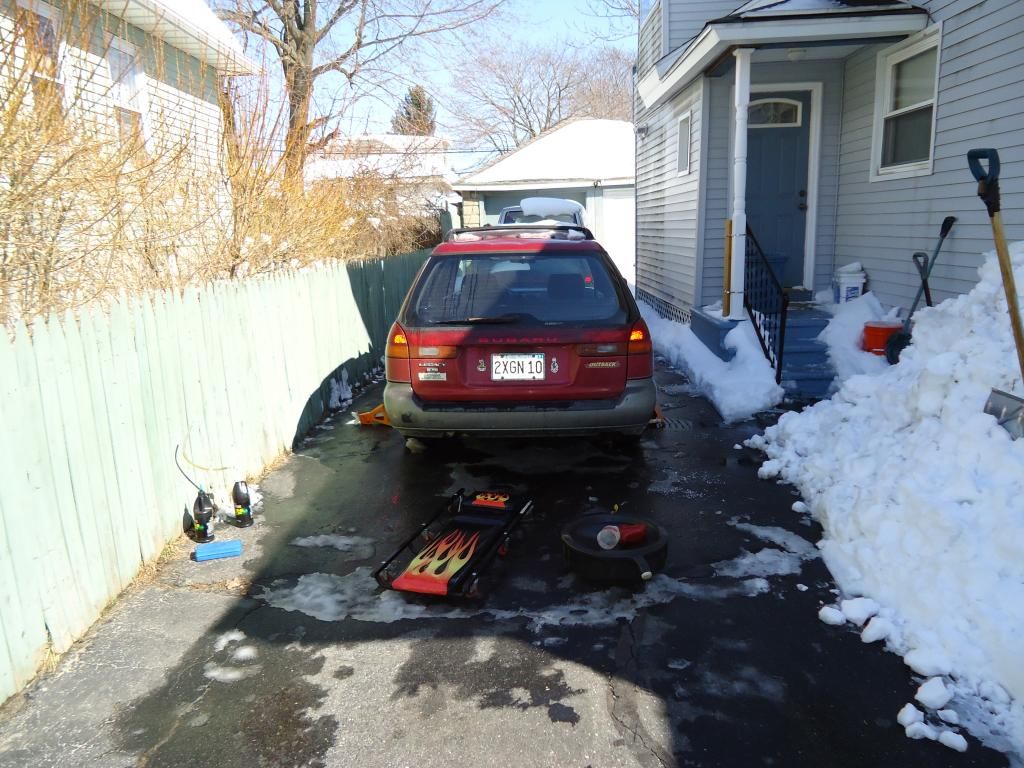
I'm certainly missing the Mercedes, but we keep getting hit by snow. This has had the unwanted effect of slowing down the work I've been doing on the Outback.
I did have a bit of luck. I found out that I didn't need to replace my starter. I had some difficulty trying to get the old one out, but in the process, I cleaned the electrical contacts. Thankfully, that seems to be all it needed. I've been driving the car for over a week with no weirdness at all from the starter.
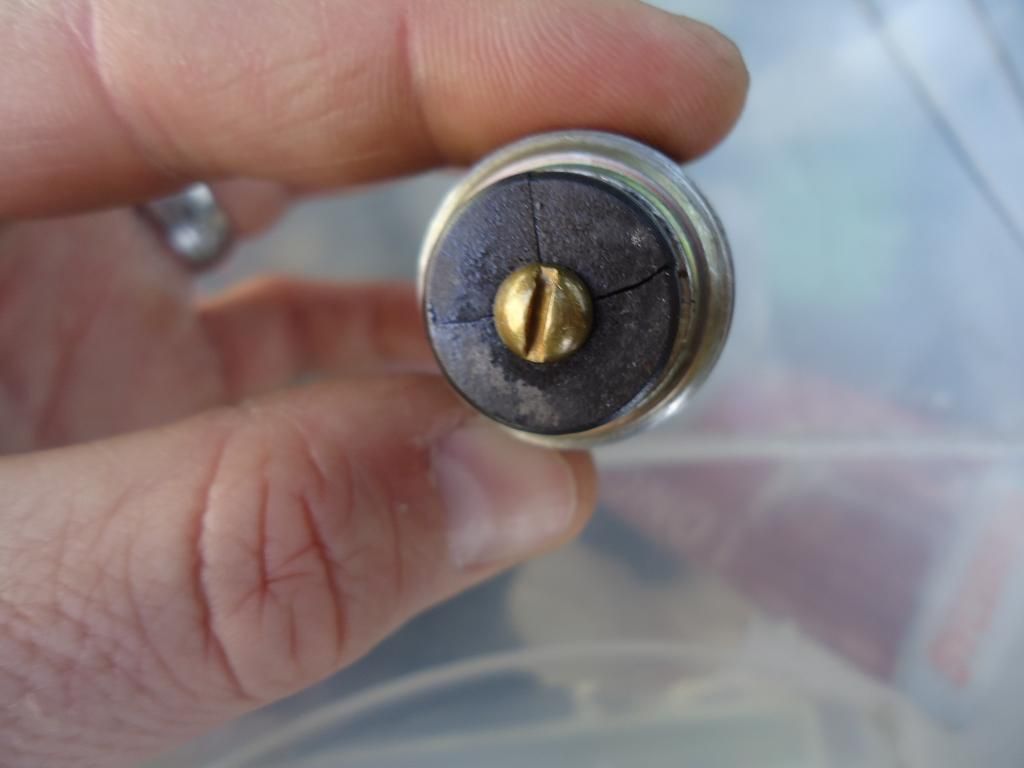
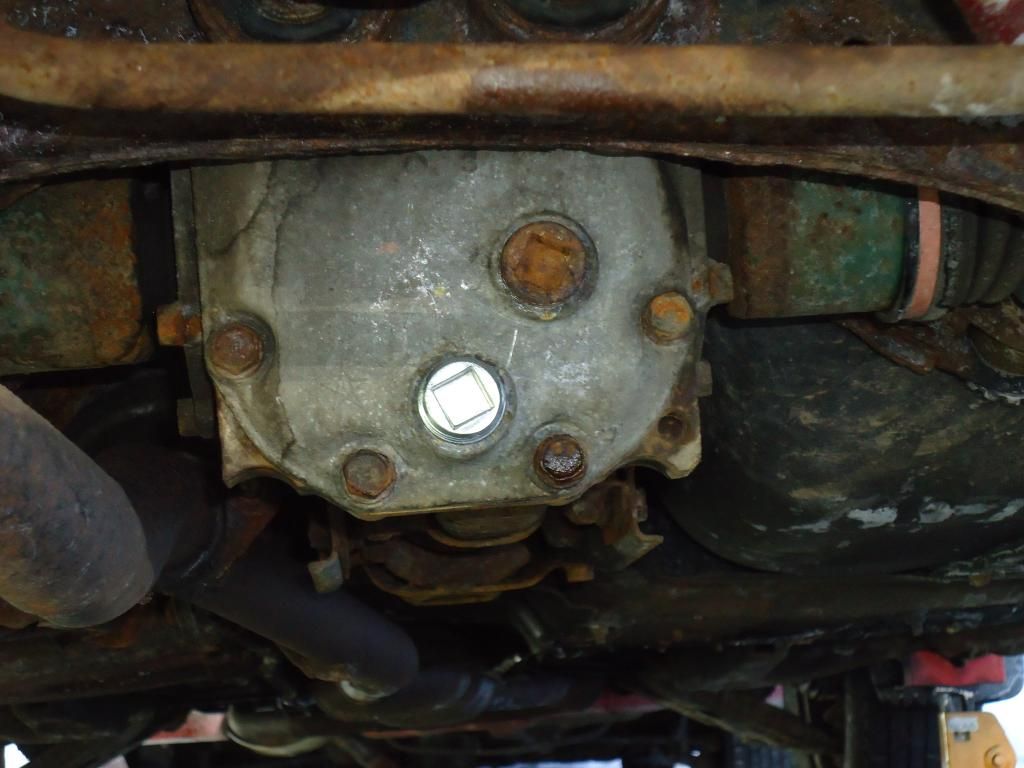
I also (finally) changed the rear differential fluid. Unfortunately, I damaged the magnetic drain plug in the process and had to revisit the job a week later to install a new drain plug. Luckily, I was able to install the new plug without losing more than a few drops of gear oil.
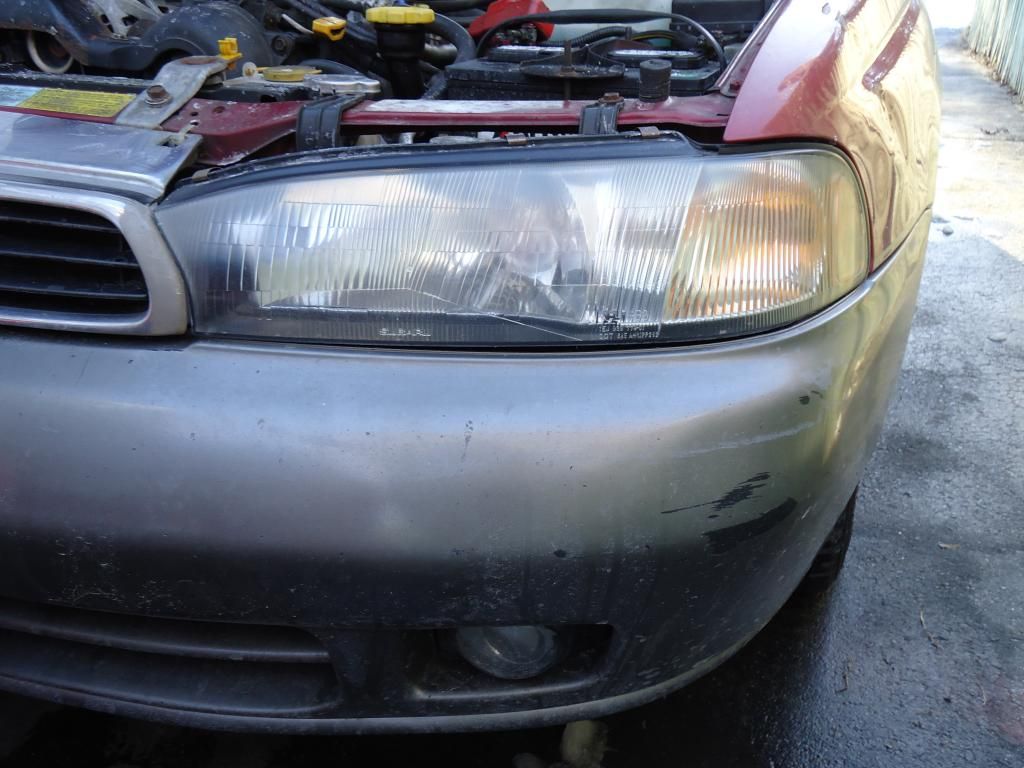
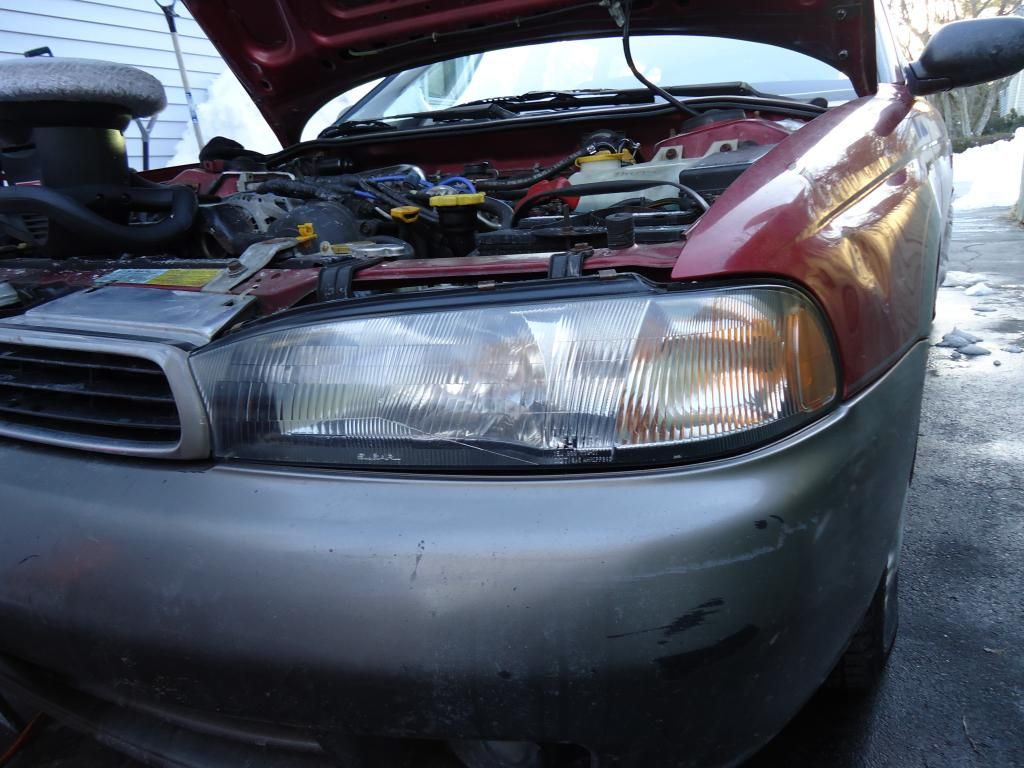
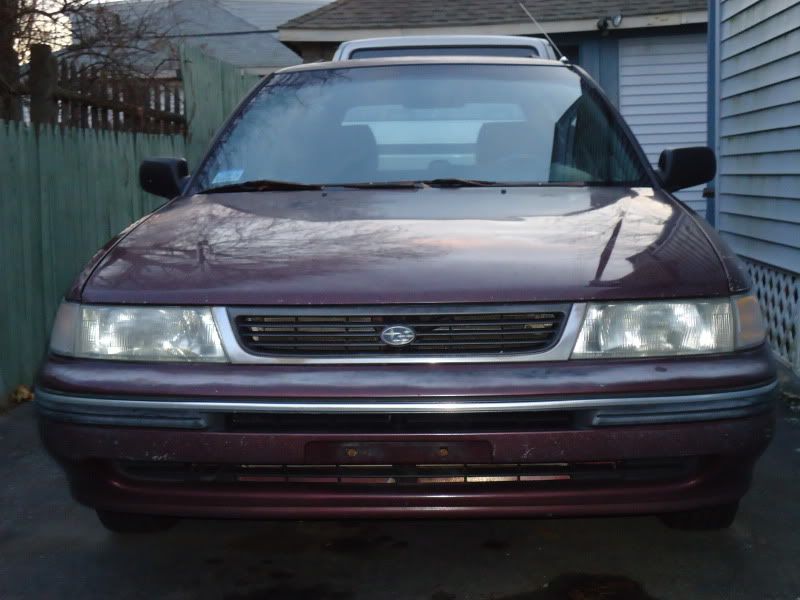
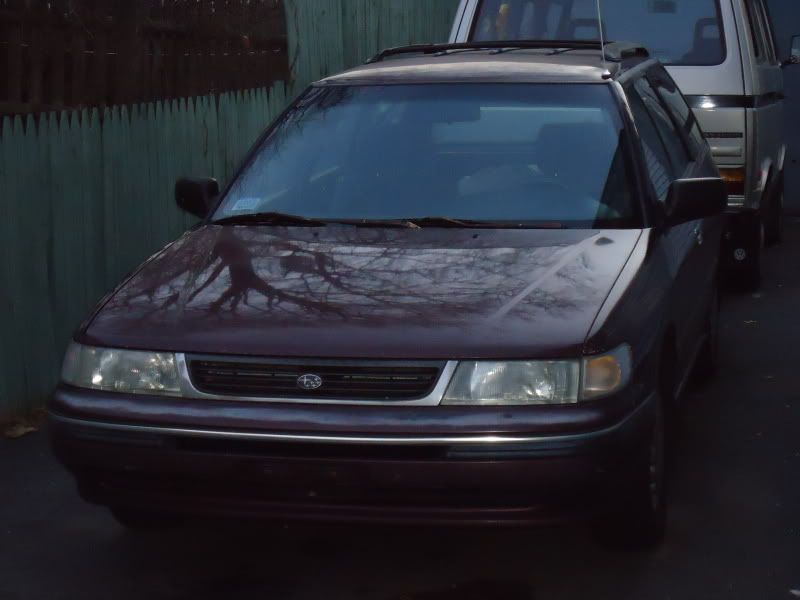
I also managed to polish the headlights and clean the windshield (in and out) to improve visibility while driving.
BEFORE
NOT MUCH DIFFERENCE, BUT... AFTER
I'm probably forgetting a few items, but I still need to replace the exhaust studs in the cylinder heads (and the manifold gaskets) and the cooling system hoses. Once that's done, the remainder is all cosmetic, and I'll be able to devote my free time to working on the Mercedes again.
Well, it looks like this may be the beginning of the end. If you've been following along, you know that I replaced the cylinder head in my 1995 Subaru Legacy daily driver earlier this year, which supposedly cured a misfire issue I;d been having.
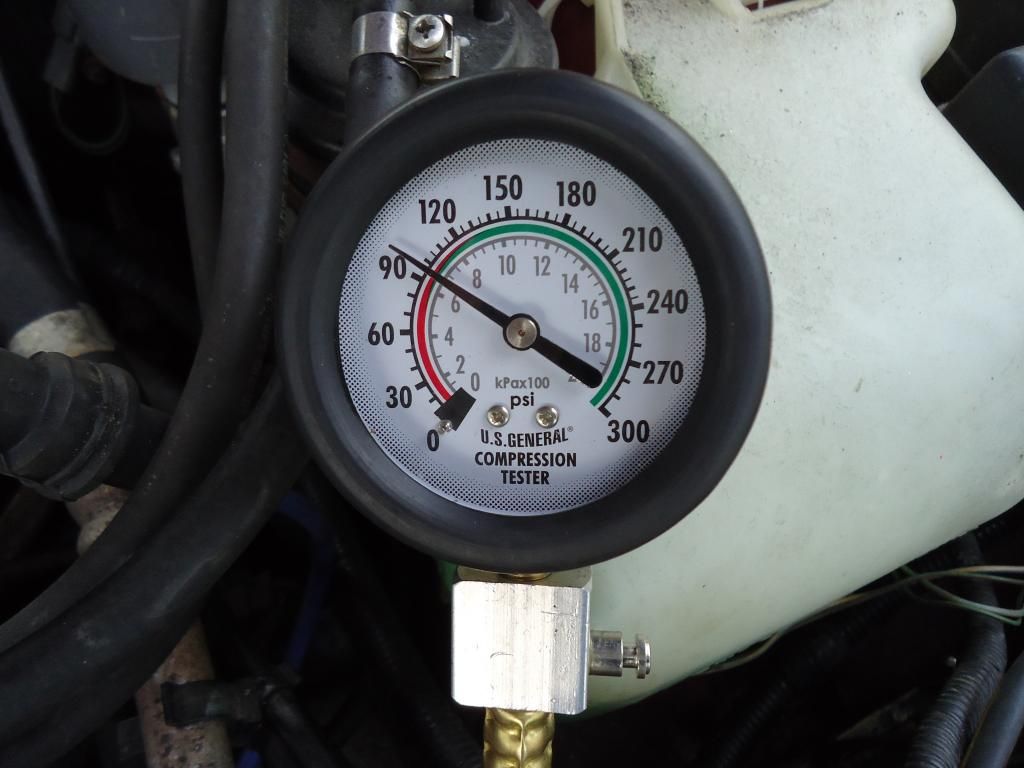
As of this past week, the misfire is back, unfortunately. The car threw the same P0302 code again. I did a compression test and verified that I have low compression in cylinder 2. This is the same test I did back in April. I had meant to re-test the car after replacing the cylinder head, but never got around to it. Earlier this year, cylinder 2 clocked in at around 70 PSI. This time, it's showing around 100 psi, which is still bad compared to the other three cylinders, which are showing 165, 165, and 160.
I'm not 100% sure why the misfire took so long to return, but it may be because I cleaned the carbon buildup off the cylinder 2 piston when I replaced the cylinder head. To buy myself some more time, I ran a can of Seafoam through the car this past weekend and replaced the spark plugs. As it is, I think I'll get through the winter (most likely with the check engine light coming on at times). But, come springtime, I'm hoping to be driving the Mercedes project, and hopefully can start looking for a "new" daily driver.
I was hoping for more miles out of this car (I've put around 45,000 very well maintained miles on the car as of now). But, the car has never run quite right for me. I'm guessing that cylinder 2 has been problematic for as long as I've owned the car, most likely due to mistreatment by a previous owner.
Because of the car's overall poor cosmetic condition, including rust, a rear suspension crossmember that's suspect, an aging transmission, an already-patched gas tank, a leaky cooling system, and numerous other issues, it's probably not worth it for me to try and replace the engine, and rebuilding it is out of the question. So, I'm most likely going to end up replacing the car. With what? Time will tell.
As of my last post, I had just gotten my daily driver Legacy back on the road after a cylinder head replacement. All went well there, and the car has been back in daily service, seeing around 90 miles per day since then.
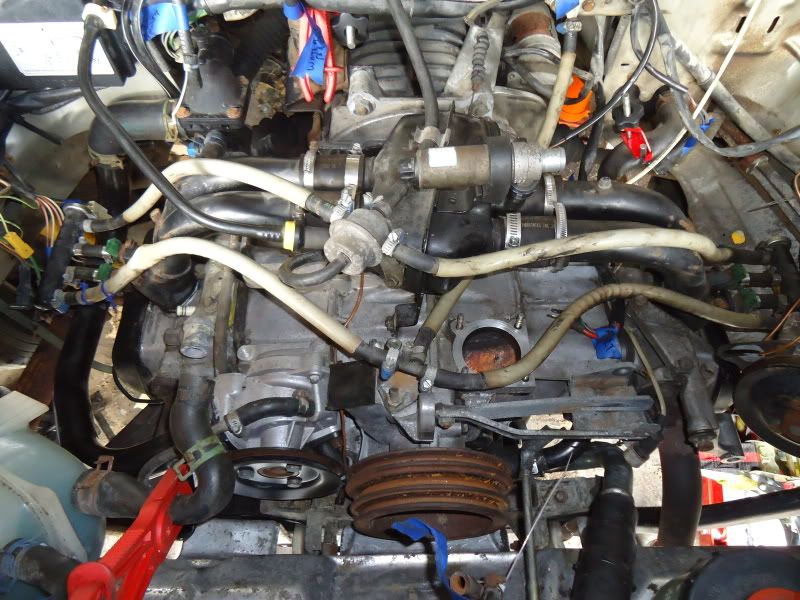
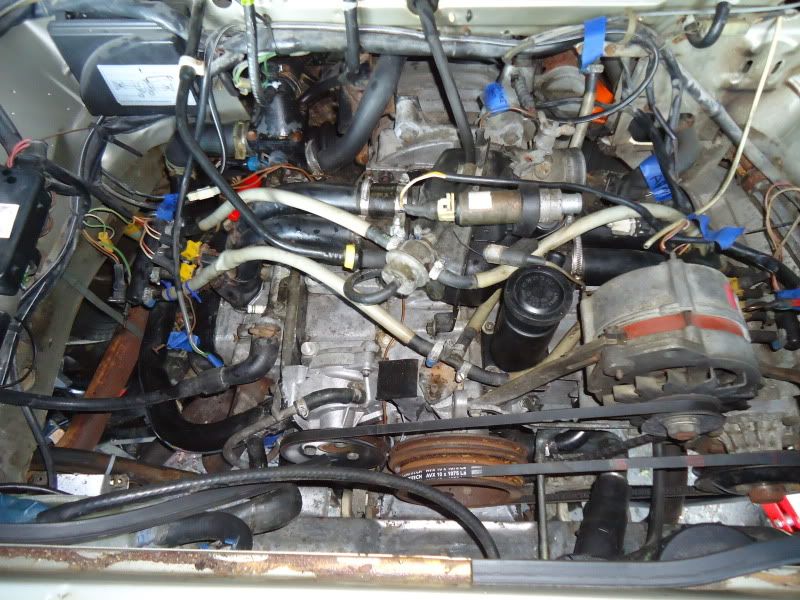
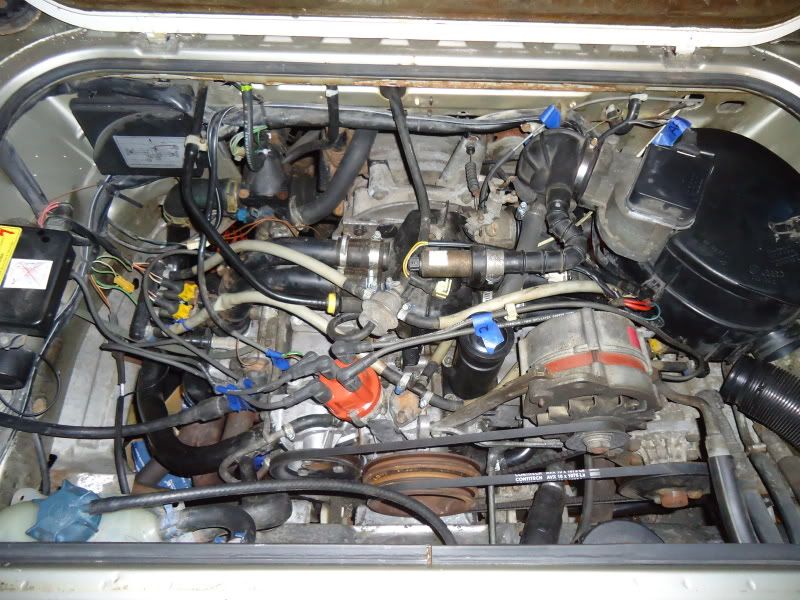
So, now that I had transportation again, I decided to get back to working on the Vanagon again. I spent the next few weekends working on it, starting with installing the flywheel on the new engine. Eventually, I got the engine bolted into place and installed.
Finally, last weekend, I got the engine to start, albeit briefly. It doesn't seem to be getting fuel, so I suspect that either the fuel pump went bad from sitting dry for six months (I drained the gas tank when I put the van into storage), or there's a blockage somewhere. I need to do further diagnosis.
But, here's a video of it starting on starting fluid (sounds pretty good for an engine that sat for at least a year and a half):
I would have done more diagnostics this weekend, but I was busy with something else... As you may remember from previous posts, I've been looking for a new car for my wife for quite some time now. I finally found it, and it's something familiar:
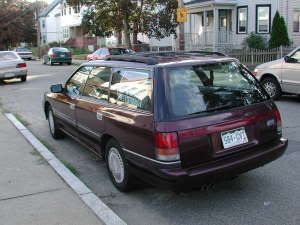
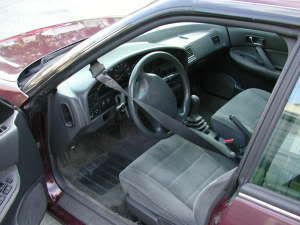
No, you're not looking at my 1995 Legacy. This is my wife's... 1995 Legacy. Actually, the only difference between the cars is that hers has an automatic transmission, fewer miles on it (115,000), and has a working air conditioner. I didn't buy the same exact car on purpose. It was just the first decent 2.2L Legacy I've seen in my price range in a while. I've been buying tune-up and repair parts all week and will be working on this car shortly. Once it's done, I'll be selling the 320,000 mile green Impreza.
As I mentioned in my previous post, when I bought the 300SD, I was living in Waltham. About a year after that, I moved out to Worcester. This made my commute by bike no longer an option. While I do have a commuter rail option, the schedule doesn't work well for me, and compared to driving, it's more expensive. So, as soon as I moved, I switched to commuting by car.
I moved in the early summer, and spent my first months commuting in the 300SD. I didn't like driving such a well-kept (and big) car into the city everyday, but I didn't have any choice other than the Vanagon, which would use more fuel. I knew the winter was approaching fast, and that since both of them were rear wheel drive, that neither the Mercedes nor the Vanagon would be a suitable car for the snowy, icy Massachusetts winters.
I decided that adding a third car to the fleet was my best option at the time. I'm planning to keep the Vanagon forever, and I was too attached to the Mercedes to let it go, either. So, I started looking at my options. I knew I didn't have much of a budget to pick up a front or all wheel drive car. My new roommate at the time had a lead on an old, low-mileage Ford Tempo. For whatever reason, I never went to look at it.
The first car I remember looking at was an early 1990s Nissan Pathfinder. It was in my price range. I went to check it out one night after work. The engine didn't sound quite right, the 4WD was difficult to engage, and the frame had large, dangerous rust holes. I decided to pass on it.
Being a Vanagon owner, I'd been doing research for the past few previous years on engines to use for an eventual transplant. Most Vanagons will need an engine replacement. Many owners opt to install something other than the notoriously leaky stock 2.1L waterboxer. In the course of my research, I learned about Subaru engine transplants. Now, having moved, I suddenly realized that an AWD Subaru would probably make a good commuter car for me.
The next car I looked at was a Subaru Legacy sedan. I didn't know much about them at the time, so I brought along my roommate at the time, who knew a little more about them. The car was OK, not spectacular. In the end, it came down to price and condition. It just didn't seem to have enough value in it.
Finally, I went to look at a 1994 Legacy station wagon. The car had recently been brought to Massachusetts by a couple who moved from Colorado. The car had more miles on it than I'd hoped (204,000), but had been meticulously maintained by its previous owners. It didn't look perfect, but ran almost perfectly. Plus, it was in my price range. I made an offer, and returned two days later, after work, to pick it up. For what I paid, I just hoped the car would last me one winter, and then I could consider possibly picking up a lower-mileage car the next year.
(seller's photos, copied and saved from the original Craigslist ad)
The car soon became my winter car. The only repair it needed immediately was a clutch. The original was almost completely worn out, so I had that done about two months after I bought the car. By spring, I realized that even though the snow was gone, I was still primarily driving the Subaru, as I liked it so much. I hadn't counted on liking the car, but fell in love with it quickly. I'd been driving for a decade, but this was the first car I'd owned that could handle winter travel safely.
In the summer of 2007, I had an axle boot fail on me, and had my mechanic (I'd finally found someone half-reliable at this point) replace the axle shaft to the tune of $300 (parts and labor). I realized that with insurance to pay on three cars, along with inspection and registration, not to mention maintenance and repairs, that having three cars was expensive. I hoped it would be a long while before the next repair. It wasn't.
Not long after the axle, I heard a new scaping noise when braking, and realized that my rear brake pads were worn out. I panicked, as I'd never had a brake job done by a mechanic that turned out to be inexpensive. I realized that if I wasnte to keep three cars, I'd need to step it up in terms of doing my own repairs. I did some basic research and decided to try and tackle the brake pad replacement on my own. Armed with a repair manual, I budgeted a whole day to do the job, as I'd never touched brakes before in my life.
From the time I raised the car up on jackstands to the time I lowered it back onto its wheels, the entire repair took me less than 45 minutes. Of course, I still had to test the brakes. I put the car in gear and backed down the driveway toward the street. Then I hit the brakes. The car stopped correctly and silently. A quick road test later and I was good to go. From that point on, I attempted (and succeeded) pretty much all my own repairs, including, but not limited to replacing the Legacy's timing belt, and then the transmission, when it failed.
Four years later, the car that I hoped would last me one winter had survived (and thrived in) four years of salt belt commuting. At this point, the car had 292,000 miles and I was starting to plan how I'd mark the occasion when the car rolled over to 300,000. That didn't happen. In October, 2010, the Legacy died suddenly on the Masspike on the way in to work. In retrospect, there had been a strange, momentary noise when I'd started the car that morning.
I had it towed home, thinking the fuel pump had failed. I spent weeks of evenings doing diagnostics to no avail. The car had fuel, spark, and seemed to crank just fine. It just wouldn't start. I checked sensors. I did everything I could, but the car wouldn't start. Here's a (long) video I did (my first Youtube foray, actually) to solicit help from online. It shows the car cranking, but not starting.
Since it was taking so long to fix, I lost hope and bought another car (a 1990 Volkswagen Jetta GL diesel) as a commuter. I was going to ship the Subaru off to a junkyard, but upon some advice I got, I did one last check on the Subaru and found that an idler had seized and the timing belt had jumped, but not broken. I replaced the belt and idlers, and the car returned to perfect working condition. See here:
Of course, this was AFTER I deregistered it. So, I flipped a coin and decided to keep the 200,000 mile Volkswagen instead of the 300,000 mile Subaru (bad decision - I'll get to that in a later post). I put the Subaru back on Craigslist, where I'd found it.
A few days later, it sold for pretty much book value, due to all the work I'd done on the car when I'd owned it.
This car was important to me mostly because it was the car I learned the most from, in terms of hands-on experience. I know it's still out there, and has probably passed the 300,000 mile mark flawlessly with its new owner.