I had a good, albeit prematurely-interrupted weekend with the Vanagon. I had to go in to the office on Sunday, so I knew that I'd only have Saturday to get things done. Even then, I had to give the Outback a little attention. Specifically, I had to do solidify an exhaust patch I made the previous weekend.
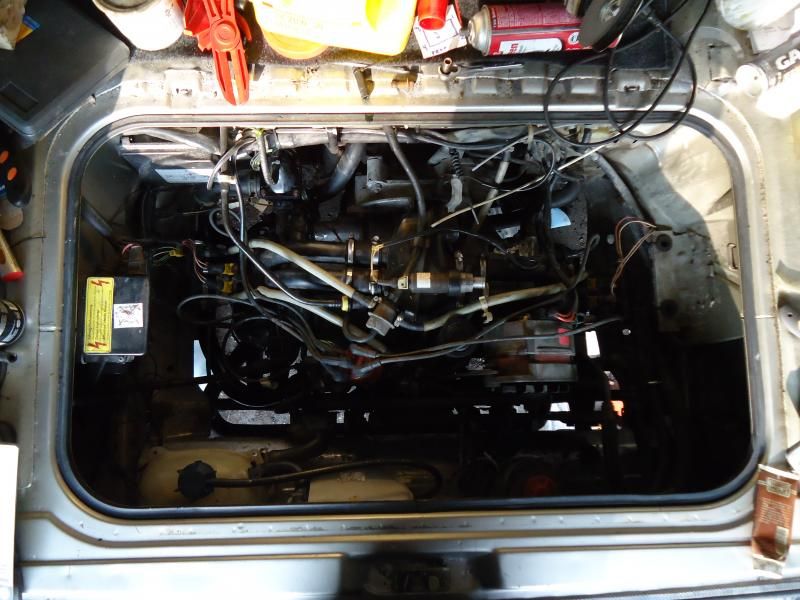
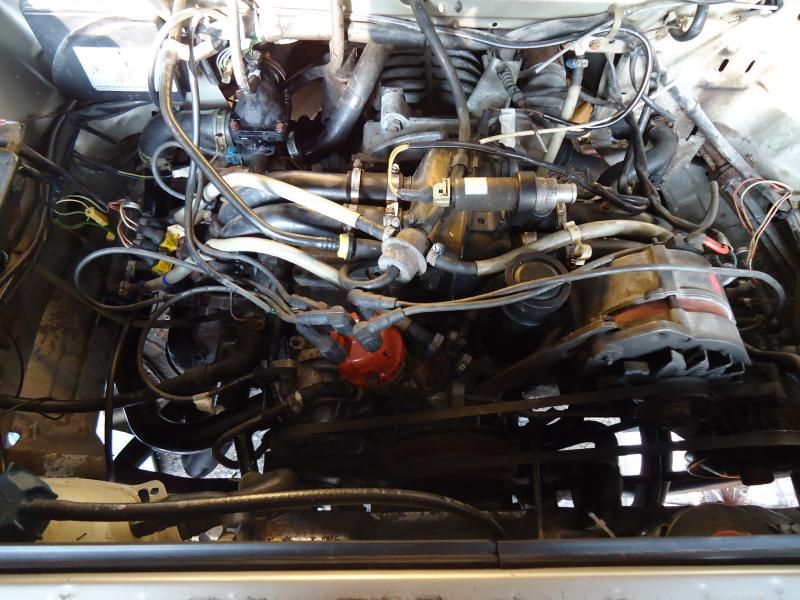
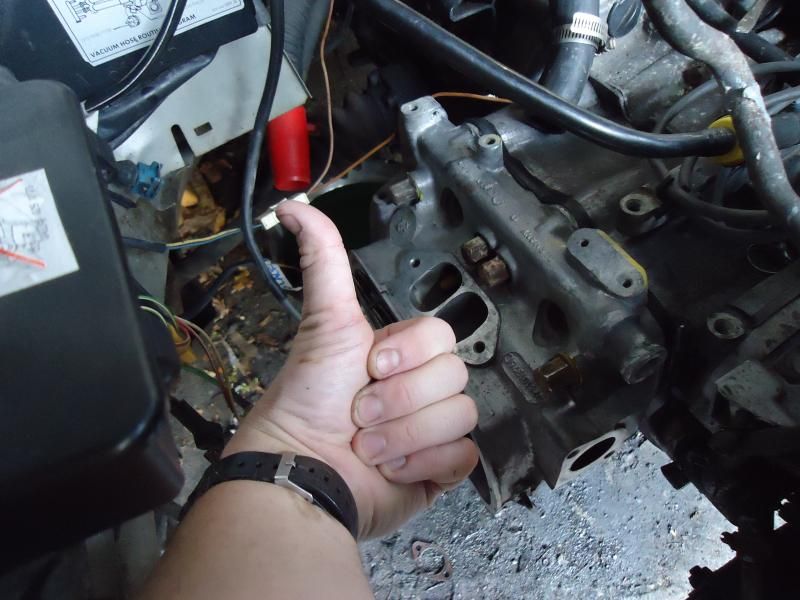
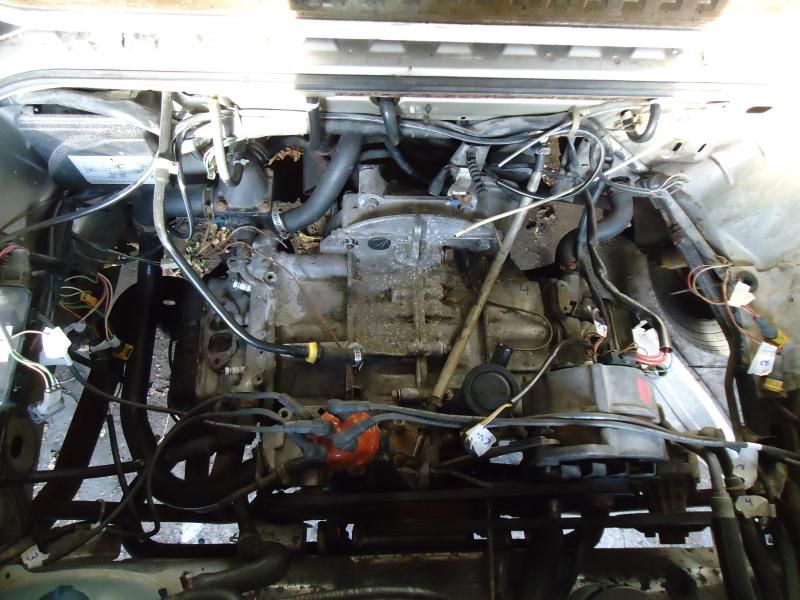
As soon as I was done with that, I turned my attention to the Vanagon. I knew all the "heavy lifting" was done. At this point, I just have to power through reinstalling the remaining bolt-on items. In short order, I reinstalled the thermostat housing, hooked up all the disconnected cooling hoses, finished installing the power steering pump, and installed the intake manifold.
At this point, all I need to do is install the throttle body and airbox, install a new oil filter, fill it up with oil and coolant, and then start it. Once it's running again, I'm planning to flush the cooling system before driving it again. If I hadn't had to work on Sunday, I'd probably be done. As it is, I'm hoping to wrench on it a bit this week and, with any luck, be able to drive it sometime this weekend.
Apologies to anyone who's been reading along. I've been busy the past few weeks and haven't had a chance to update the blog.
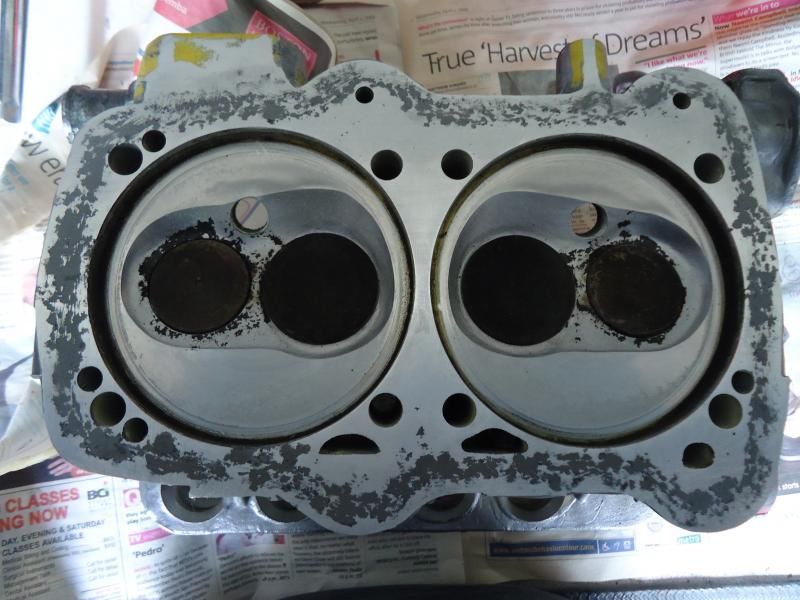
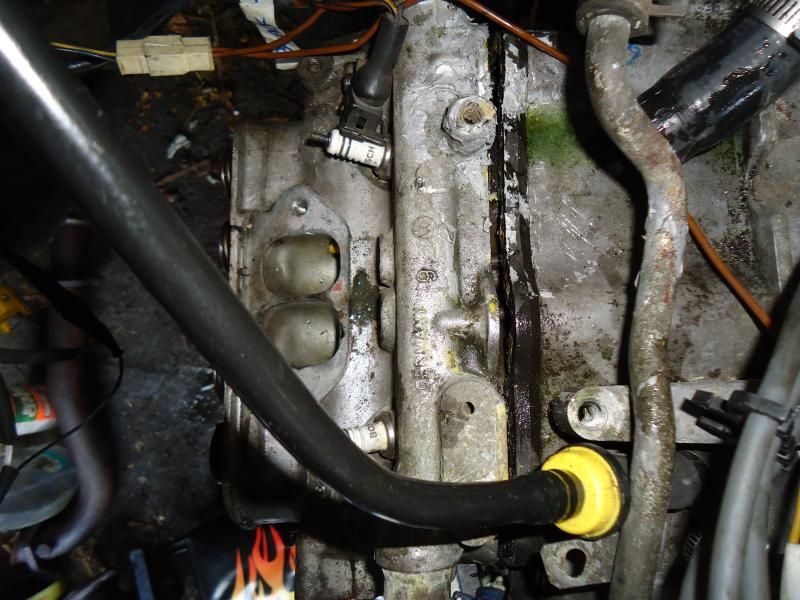
I was able to finish up and install the driver's side cylinder head. While I had it all apart, I opted to do the passenger's side head gasket, too. When I pulled the AMC head, I was surprised at how much pitting there was.
I got that side done and then reinstalled the rocker assemblies and pushrods (hopefully correctly). The pushrods can hang up a bit on installation. You need to be careful to properly seat the pushrod in the hydraulic lifter.
After that, I installed the exhaust. Not in one session, mind you... but more like piece-by-piece as time allowed. In the past month, work commitments, family commitments, and much-needed work on the daily driver Subarus have kept me from working on the Vanagon. Hopefully, I'm past that.
My (ambitious) goal is to have it back on the road for the 4th of July.
This past weekend, I finally got the exhaust off the van... without breaking anything. I had to cut some bolts. There were copious amounts of flame and penetrating oil involved. And my angle grinder.
But, I got the exhaust off. All the pipes survived and looked in good shape. I have new gaskets and a new bolt kit for when it's time to reinstall it. Once the exhaust was off and the cooling system was disconnected, I got to removing the driver's side cylinder head. I had everything disconnected and the head itself unbolted, including bagging and tagging all the small parts, in under a half hour.
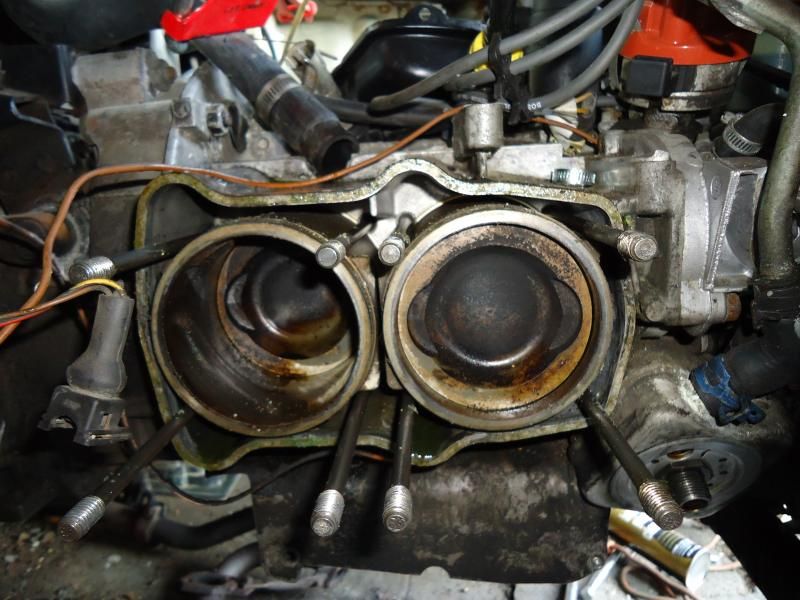
Unfortunately, the head was stuck to the cylinders. On a Vanagon, the cylinders are 4 separate individual pieces from the actual engine block. I worked on it again Monday and Tuesday evening, which is when I eventually got the driver's side head to separate from the cylinders with some gently prying.
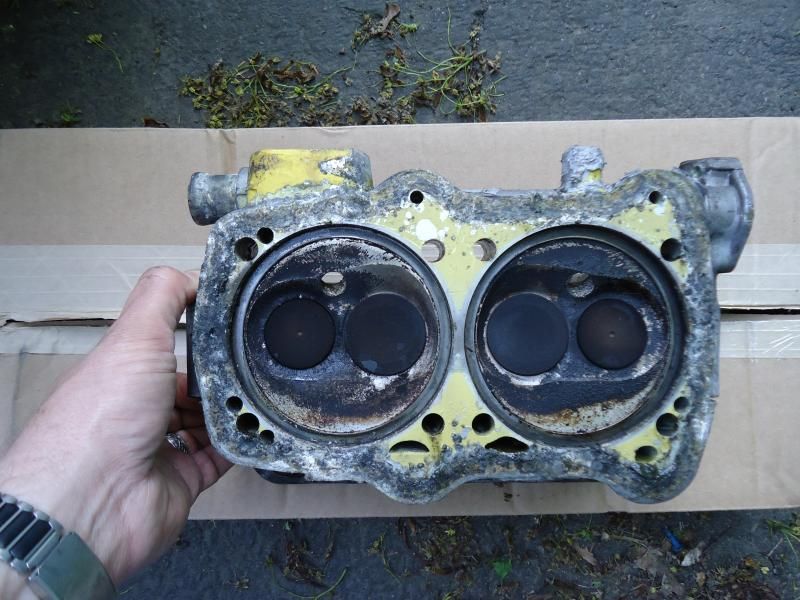
Once it was off, I got a good look at the cruddy, corroded surface. I cleaned it up last night (which helped a lot). Tonight, I filled the pitting with JB Weld (a common fix for this). Once it's cured, I'll sand it flat, and I'll be ready to start reinstalling the head on that side. When that's done, I'll start on the passenger side. Hopefully, that side will go more quickly.
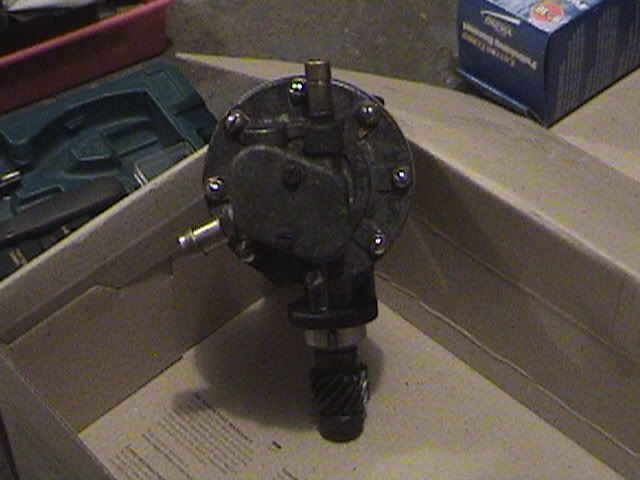
Head separated from block
Head off block. Cylinders pushed back into water jacket.
Driver's side head off. Dirty and corroded. Need to clean it off.
Head cleaned up. Lots of pitting, but starting to look better.
Pitting filled with JB Weld. Still needs to cure so I can sand it flat.
They say there are two types of VW Vanagon owners. Those who have taken their engine out, and those who haven't taken their engine out... yet. Last year, I finally made it into the second category. When the original engine gave up on me in late 2011, I anticipated that the van would sit in storage for a few years while I saved my pennies for a more exotic engine swap (Subaru EJ22, Bostig Ford Zetec, etc). The van sat for less time than I originally thought.
In early 2012, I stumbled upon a local Craigslist ad for a used, running 2.1L VW waterboxer engine. It was dirty, and had sat for a year after being pulled (running) in favor of a Ford Zetec swap. I spent months of what little spare time I have replacing hoses, gaskets, and cleaning the engine up. As it came from an automatic Vanagon, I also had to swap over a few parts from my old engine to run this one with my manual transmission.
Anyhow, I crossed my fingers vis-a-vis the head gaskets. I could see that the passenger side had already been replaced. In July, I got the van to start, run, and drive again. I've driven it sparingly in the past year, but learned early on that the driver's side head gasket had a leak. I tried a few stop leak products that only slowed it down.
So, now that the Outback is on the road and reliable, I'm starting in on the head gasket job. I'm going to try replacing them without taking the engine out again, and hope to have the job done in under a month. Once again, I work slowly and have limited time to do the job. The new engine does run well otherwise. The leak is external, and the oil and coolant weren't mixing. I can't wait until it's done and reliable again, so I can take it camping.
Hopefully, I'll have it done before Memorial Day. I bought the Vanagon in late May, 2003, so next month will mark ten years. I can't think of a better way to mark the occasion than to drive it again.
Apologies to anyone who's been reading in the past six weeks looking for updates on my regular projects. I really haven't touched the Vanagon or the 240D since early April. I've been busy with the Legacy.
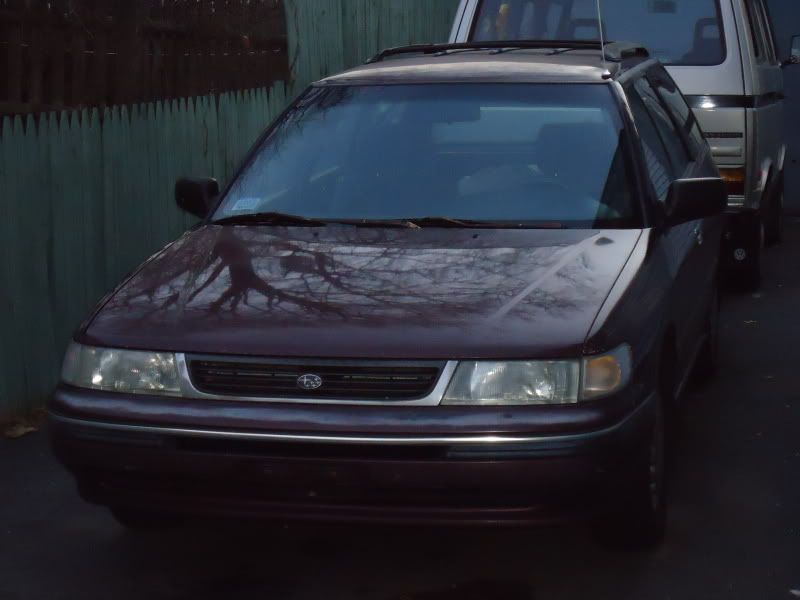
Right around the time of my last blog post, the Legacy started running poorly and throwing a P0302 trouble code. I threw a few parts at the car, hoping it would be a simple fix (spark plugs, wires, a new coil, and finally, a fuel injector). None of this changed how the car ran, and no matter how many times I reset it, the code kept coming back.
So, after throwing money down the drain on non-returnable parts I didn't need, I did what I should have done in the first place - I ran a compression test:
The results were conclusive, showing low compression in cylinder 2 as the cause of the misfire. From the specifics of the test, it looked like a burned exhaust valve or a worn valve guide was likely the cause of the problem. So, after some brief soul-searching, I decided to go ahead and repair the car. The clearest path to that goal was replacing the cylinder head. Learning how to do that was enough without having to learn how to rebuild it myself.
I ordered a rebuilt cylinder head from F&S Auto Parts in Roxbury, CT, who I found highly recommended on several Subaru message boards. They rebuild cylinder heads to order, so I had to wait a little over a week for the part. In that time, I did something I hate to do - I commuted to work by train. Frankly, it's crowded, overpriced, uncomfortable, and the schedule is horrible. But, at least I was able to get to work.
For a while, I felt like an urban redneck. I had three cars at home, none of which I could drive. Finally, my cylinder head arrived, but not without difficulty. Let me paint a picture for you...
It was a sunny Saturday morning, around 11 AM. I was home, and, anticipating the arrival of the cylinder head, I went to look out the front door to see if the local mail carrier was on our street yet. I saw no sign of the mail truck, but found the day's mail in the mailbox, along with an attempted delivery notice indicating for my cylinder head. I needed the part, and in a panic, tried calling the post office (I got no answer). Not knowing what else to do, I started searching the neighborhood in my wife's car, looking for the mail carrier. I found a succession of trucks and carriers, none of whom were my mail carrier, but who were all helpful. Finally, one of them directed me to a street around a half mile away from my house, where I found another truck. I waited like a madman (as politely as I could) for the carrier to return. When she did, I was happy to find that she had the cylinder head, and was happy to let me have it just so long as I signed the delivery notice.
My prize in hand, I sped back to the house and started tearing into the Legacy. By the end of the day, I had the intake manifold off. By the end of the weekend, the new cylinder head was installed, but the engine wasn't buttoned-up yet. By the middle of that week, I had the car back on the road, running better than it ever had since I bought it.
So, on top of that, another weekend that I was horribly sick, and this past weekend, when I replaced a CV axle on my wife's car:
...I haven't had any time for the Vanagon.
But, I've budgeted most of the upcoming long weekend to wrench on the van. I am still planning on having it back on the road for the summer.
The title of this post says it all... but as usual, I'll say more.
As per my last blog post, the Vanagon made it home after Transporterfest, but only courtesy of a AAA tow. My long-term plan is to do a Subaru EJ22 engine swap. I've been around the original VW waterboxer engine since my parents bought their first Vanagon in 1985, and have owned my stock Vanagon since 2003. So, this isn't a snap decision. I've seen these engines fail more often than they work properly.
I didn't want the van to rot in the driveway while I saved and made preparations for the engine swap, so my goal has been to get it into the garage. In order to do that, I needed to move the Mercedes out.
The problem with that is that the Mercedes hadn't been so much as started in the better part of two years. I've been working on it bit-by bit - bodywork mostly up until this point. Thankfully, I'd been maintaining the battery. Still, I had to do a marathon of maintenance before the car would start:
After the Mercedes finally started, I took a chance and started the Vanagon. Amazingly, it wasn't completely dead. It was weak, noisy and smoky, but drove into the garage under its own power:
So, as it is, I'm currently trying to sell the Mercedes, for two reasons. First, I need to start raising money for my engine swap. More importantly, I just can't have two big projects sitting around. The Vanagon was my backup car. It's my project now. As such, I'll need to get something a little more roadable for a backup car.
Egad! It's been nearly a month since I updated the old b-log. And what an unfortunately eventful month it's been.
I'm not going to beat around the bush. The Vanagon is dead. Well, "mostly dead" anyway, to steal a line from Billy Crystal. As per my last post, I was having suspected oil pressure problems. I plumbed in a gauge and drove it locally a bit. Everything seemed more or less OK. I even attempted to install a tachometer:
The results of the second oil pressure test with the tach installed were inconclusive, due to poor quality aftermarket gauges. So, I decided to drive a little more locally to test the van. I was planning a trip to New Jersey, which should have happened this past weekend, and wanted a few more local miles under my belt before I took a long trip in the van. So, a week and a half ago, I decided to take the Vanagon to Transporterfest, a VW bus show at the Larz Anderson Auto Museum in Brookline, MA.
The van handled the first part of the trip OK, but as it really heated up at highway speed, the oil pressure began to drop. By the time I got there, the light was going off intermittently. Not a good sign. So, I enjoyed the show, and when it was over, I decided to head home. It was a 40 mile trip there and back. Well... I didn't make it back. Actually, not true. I did make it back home, but with the help of AAA and a ride from my wife:
Long story short, the van will probably start, but a scant 300 miles or less since I completed all the work, and the engine is pretty much dead. As I don't have the money to fix it (yet), I de-registered it, de-insured it, and am preparing to get it into the garage for long-term storage.
Bottom line, I don't want to sell the van. I don't need to, and in its current mechanical condition, it probably wouldn't sell for much. So, I'm a bit sad. After almost eight and a half years, the van is no longer usable. But, this is where we get to the point of this particular blog post.
In the past, every time I've had major car problems, I've learned something or otherwise gained from the experience. Conscious of that trend, I'm trying to take as many positives out of this experience as possible.
Most of all, I'm going to use this to complete a long-time goal of mine and learn how to swap a Subaru engine into the van. Once I can save enough money for the conversion parts, I'll be dropping in a Subaru EJ22 engine, just like in my Legacy. I know the engine very well - even better than I know the Vanagon's engine at this point. Putting one in a Vanagon, though... that's going to be a learning experience.
But, it'll be a long while before I have the money for the project. So, in the meantime, I'm going back to working on the Mercedes 220D project. I dug it out this past weekend:
It hasn't even been started since April, 2010. I'm hoping to have it running again this weekend so I can get it out of the garage and clear up that space for the Vanagon. I'll be resuming work on the Mercedes outdoors. As much as I didn't want to work outdoors in the winter again, I'd prefer to do that rather than leave the VW outside. When it's done, I do plan to enjoy it a bit, but will eventually sell the Mercedes to help fund the Vanagon engine swap.
As of my last blog post, I've covered all the cars I've owned. So, as you can see, I'm a car nut, and a do-iy-yourselfer. I'd much rather tackle a repair job myself than pay someone else and trust that they'll get the job done right and not rip me off. With 100-ish miles of driving daily each between my wife and myself, routine repairs and maintenance add up quickly.
The downside of this is that I have little free time for anything other than fixing my cars.
The upside of this is that I have plenty to film and write about for you fine folks.
With so much on my plate, my projects need to be handled in order of priority. Sometimes, one car gets a bit neglected in favor of a needier one. That's just the way it works out.
If you've been following my blog, you know that my second car was the Vanagon. I bought it back in 2003 and it's currently the second place record holder for the car I've owned for the longest amount of time. The first place record holder is still my first car - the 1982 Mercedes 240D, which I had for a hair shy of nine years. The Vanagon will assume the first place slot next Spring. Despite this, it's also the car I've driven the least (only counting among cars I registered and actually drove). Although I do take it camping and use it for hauling on Home Depot runs, it's in pretty amazing shape for its age, and I've tried my best to keep it that way, despite living in New England.
Shortly after buying the van, I joined a VW club. My original motivation was to meet some people who knew about these vans and maybe abosrb some knowledge to help me fix the van myself. I really liked the group. The club is now somewhat defunct. We were all in the same age bracket, and over time, we've all been less active on the car "scene" as we've moved away, gotten married, or miscellaneous. We're all still good friends and in touch, though.
Anyhow, although I didn't learn anything maintenance-wise from the group, we had a lot of fun, and attended a lot of car shows together. Eventually, they convinced me to start entering the van into shows. I didn't think the van was show-quality, but others disagreed. I entered the van into competition for the first time at H2O International in Ocean City, MD, in 2003, and walked away with first place in my category. I kept entering it in shows and I kept winning for two reasons:
Almost nobody brings Vanagons to these shows. I had very little competition in my category.
When I did have some competition, I usually won. The van is just that nice.
Of course, it's been more than a few years now since I showed the van competitively. Other projects got in the way, and New England weather and road salt started to take a toll on it. This past winter, as my Jetta was constantly breaking down, I drove the van a lot, which I hate to do in the winter. It handles poorly in the snow and I hate exposing it to road salt.
I knew the van was dripping oil, but the drip had gotten much worse. On top of that, the van was dirty and grimy in and out, and very small surface rust spots which I'd ignored for years were really starting to bother me. So, as soon as the "new" Subaru was on the road, I got serious about repairing the van, and bringing it back to a condition approximating the way it was when I bought it.
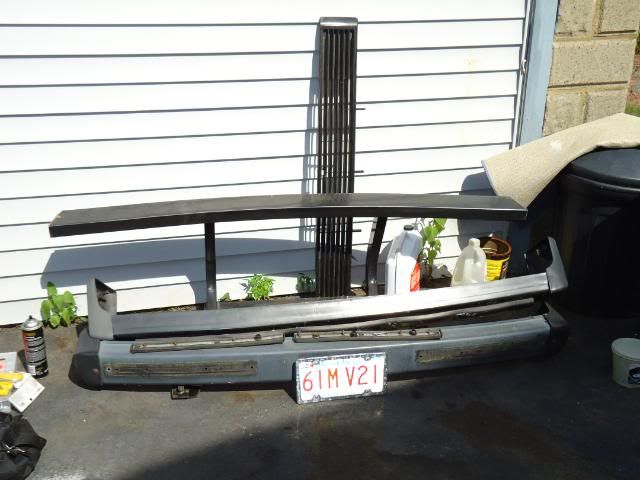
First up, I tackled the oil leak. I replaced a bunch of oil seals, but the problem turned out to be one of the oil pressure sensors, which had developed a large leak. After that, I got to the bodywork. I pulled a dent that had been on the van since before I bought it (back in 2003, I simply Bondo-ed over the dent) and did some touch-up painting. I also removed the surface rust spots and coated those areas in Miracle Paint before applying the final touch-up paint. I also pulled the bumpers and brush guard for repairs and touch-up painting.
When all that was done, I gave the interior a massive cleaning, including all the interior glass, which hadn't had a good cleaning in a couple of years. As of this blog post, I'm not done, but am NEARLY done. I still need to do a final bits of touch-up on the brush guard and need to give the van a good wash and wax.
But, when I'm done, the van will once again be a pleasure to drive, and I hope to take it to a show or two this season yet.
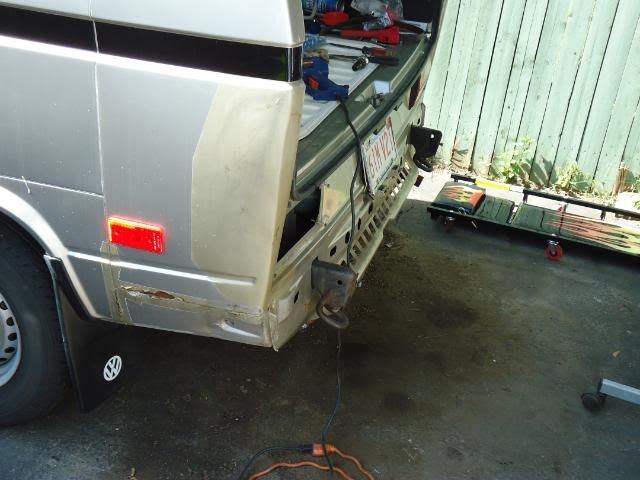
(before - old touch-up paint failing and seam rust showing)
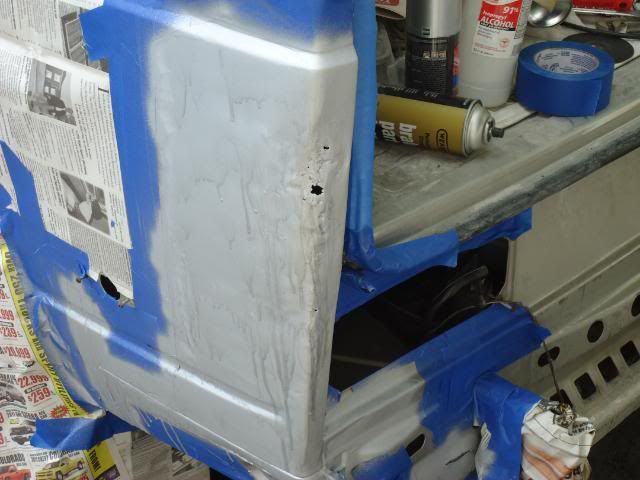
(Bondo ground away and dent PROPERLY pulled)
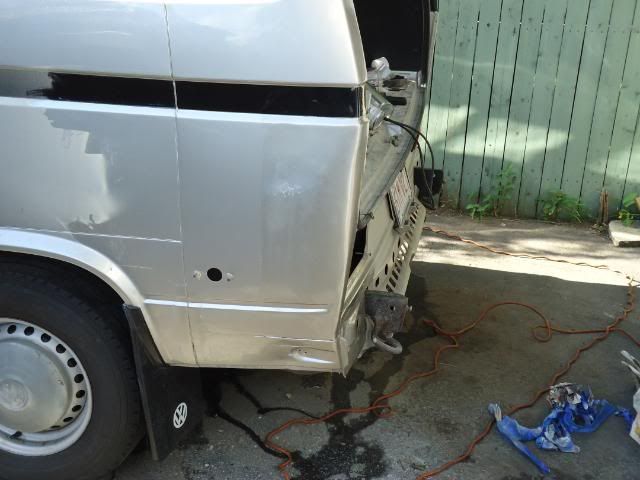
(completed repair - light gray on left is dust)
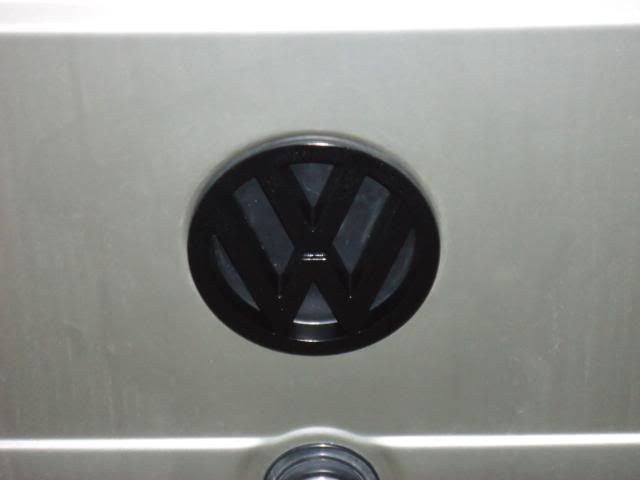
(rear emblem chrome had flaked off - repainted it black)
As per my last blog entry, I now had the ever-reliable Subaru, the Vanagon, and now the 220D project. Even though the Mercedes wasn't driveable, it was mine. So, naturally, I was feeling pretty good about myself.
I spent whatever weekend time I could working on the 220D, knew the Vanagon was staying pretty reliable, overall, and the Subaru was going to run forever... or so I thought.
One morning, in October, 2010, I started the Subaru. I thought a heard a noise, momentarily, like a slight grinding or scraping. It was subtle, but went away immediately. I didn't have any time to fuss with it, so I left for work, as I always do. I got on the Masspike, put it in fifth gear, and started cruising.
About ten miles down the highway, just before the exit for route 495, the engine suddenly hiccuped, and lost power momentarily. Once again, I didn't worry too much about it. Then, a few seconds later, the engine shut off completely. I was in the right lane (thankfully) and coasting at 65 miles per hour. I flipped on my hazard lights and coasted to a stop in the breakdown lane.
I checked the first, most obvious thing - the fuel gauge was still rearing 3/4 full. So, I wasn't out of gas. I tried to start the car again, to see if the shutdown was a fluke. The starter cranked OK, and sounded more-or-less normal, but the engine just wouldn't catch and turn over. I figured I most likely had a dead fuel pump, and called AAA.
To their credit, they had a truck out to me shortly, and since the dispatching tow company was near where I lived, they agreed to tow me home. I was already late for work, so I parked the dead Subaru and hopped in the Vanagon. That evening, I began diagnostics to see if I could figure out why the car wouldn't start. I even went so far as to pull the OBD I blink codes and try and make sense of them.
After a few weeks of trying, with no results, and winter fast approaching, I realized that I needed to replace the Subaru. I didn't want to do it, but I needed something that would handle winter travel. A 180 degree spin off a road lightly-covered in snow a few years earlier convinced me to never drive the van in the winter again. As always, I took to Craigslist to try and find some new wheels. Of course, this time, nothing suitable was showing up in my price range aside from a mechanically-solid Subaru with a DANGEROUSLY rotted body.
I expanded my search to the Samba. If I couldn't find a Subaru, I would have happily settled for a car like my old Golf. Immediately, I saw something even more interesting - a 1990 diesel Jetta. According to the ad, the car had some problems - mostly cosmetic - that I thought I could handle. After a few emails and phone calls I was off to Connecticut to see the car.
It seemed a little rougher in person than I thought it might be (mostly interior stuff), and the paperwork was questionable, but I decided to take it for a test drive. I thought about it, made an offer, and soon, I was driving home in my super high MPG Jetta GL diesel:
For the most part, I thought the Jetta just needed a little bit of exterior cleanup and new carpeting. Yeah... not quite.
Shortly after I bought the Jetta, I did get the Subaru running again (perfectly, I might add). So, I had too many cars. I opted to keep the Jetta, which had 100,000 fewer miles on it than the Legacy. I sold the Legacy just as winter was beginning.
(final parting shot of the Legacy)
Before I go any further, I just want to preface the rest of this by stating for the record that I don't think the guy who sold me the car had any idea at all how badly it would shake itself to pieces in the coming months. The guy who sold it to me had owned the car for a year or so but hadn't registered it, though he'd done some work on it. Nevertheless, he hadn't actually driven it any real distance.
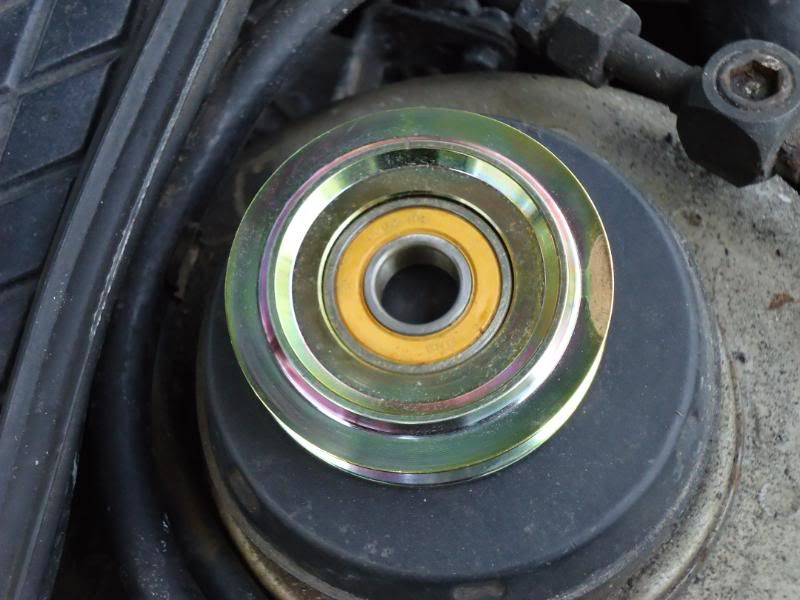
The second day I had the car home I changed the oil, not knowing how old it was. When I was done, I took the car for a quick test drive, to find out that the alternator belt was squealing like a bastard. The next morning, on the way into work, the belt broke one me a block away from the house. I ended up replacing that belt four or five times in the four months I owned this car, even going so far as modify the belt drive to try extend belt life. No go.
If that were it, I could have lived with it. But, in the four months I owned the car, I had to replace the following (in no particular order):
screaming speedometer cable
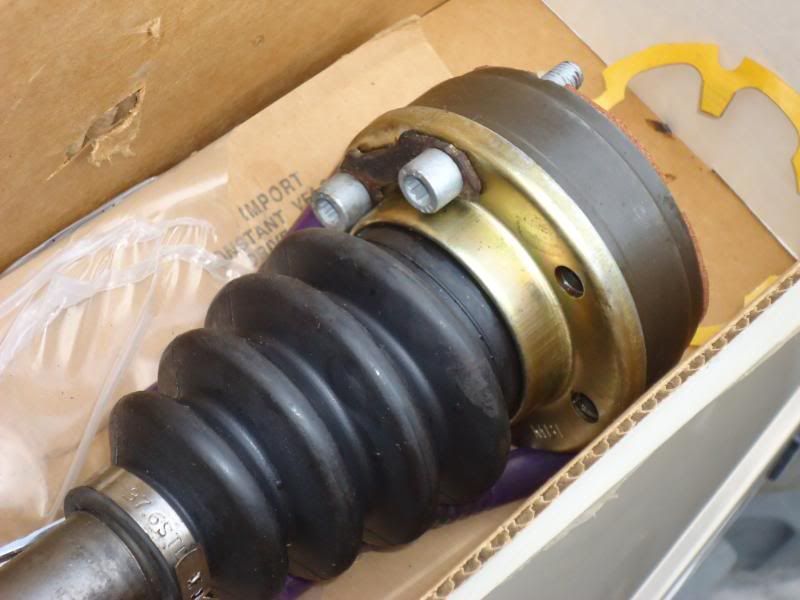
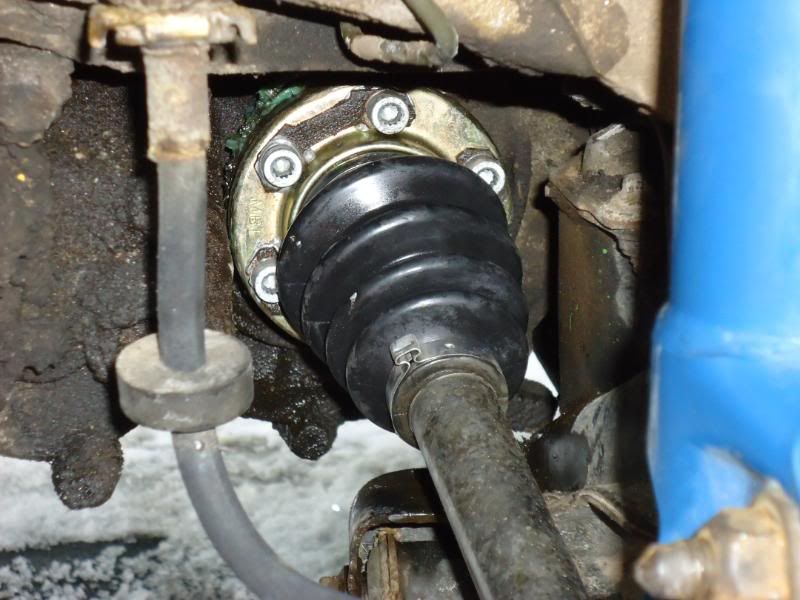
CV axles
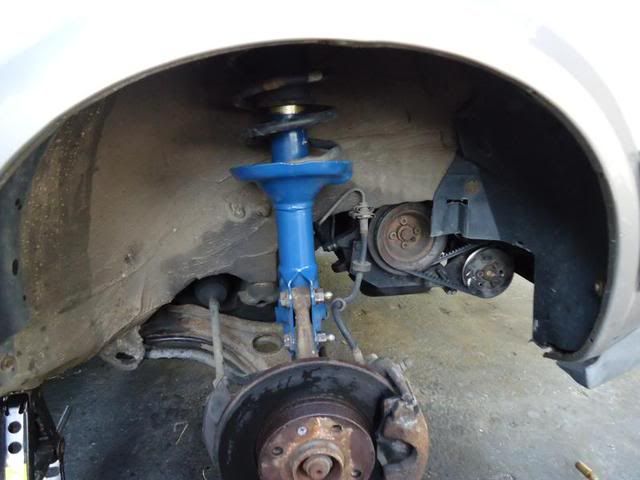
shocks (all four corners)
carpet (car came without it)
radio
thermostat
engine air intake tube
numerous alternator belts
more that I can't remember
battery
(new alternator tensioner pulley)
(alternator belt drive modification - new roller bearings to compensate for belt deflection and to ease belt tension)
(shiny new CV axle)
(new CV axle installed)
(rebuilding one of the front struts)
(rebuilt strut installed)
Keep in mind that I had to do all these repairs outdoors, in Massachusetts, in the dead of winter, in sometimes single-digit temperatures in the dark.
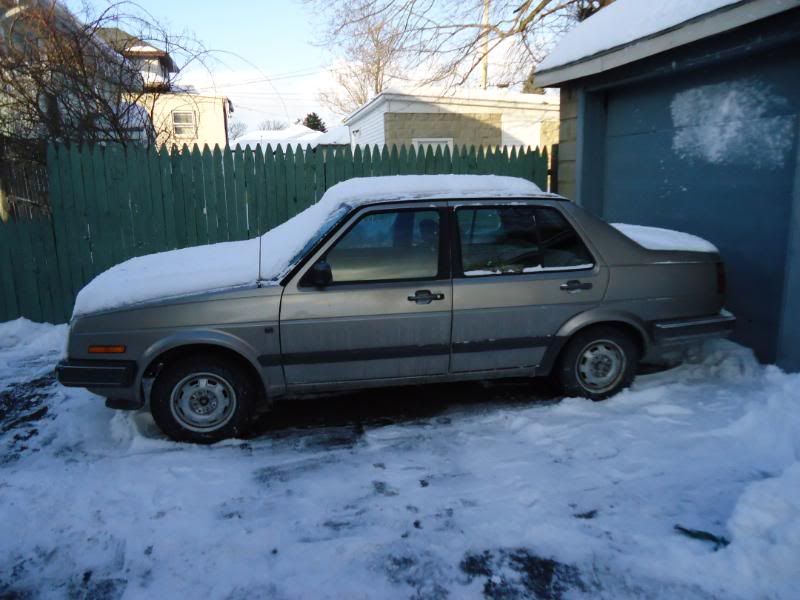
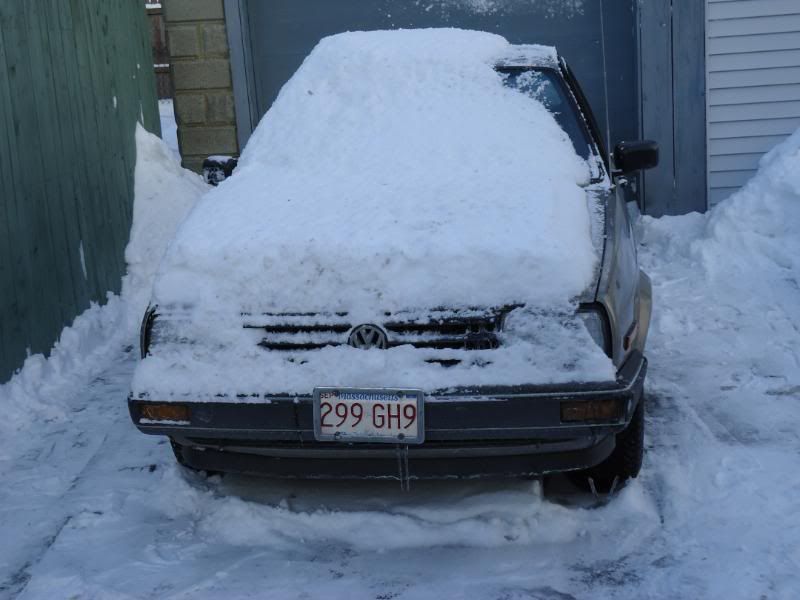
(how the Jetta spent a big portion of the winter)
The final straw for me was when the front left wheel bearing toasted itself. It still rolled, but the wheel had a half inch of play when off the ground. I got fed up and didn't want to fix that also. I ordered the part, but sold the car (and then sent the new wheel bearing to the new owner). I had the car up on Craigslist a short while, and came down in price very quickly. As I told the buyer - "I just wanted the Jetta out of my life." I'm usually never that blunt and never negotiate so freely, but I wanted the Jetta gone.
For the record, I told the buyer everything I knew about the Jetta, from what the person I bought it from told me, to every repair I did on the Jetta, to everything I knew that was wrong with it. Whenever I sell a car, I give full disclosure. It usually helps me sell a car quicker and at a higher price, I think, than sugar-coating it.
Even though it got 50 miles to the gallon, I'd spent all the fuel savings on new parts, and had to do all the repairs myself, to boot. I hope the Jetta behaves itself better for the new owner. This is the first time I sold a car without having a replacement already lined up. As such, within minutes of it leaving the driveway, I was on Craigslist. Inside of 36 hours, I was driving my new car. See the (coming soon) following blog post for more on my current daily driver - another Subaru.
Here's some videos I took of the Jetta while I had it:
I don't believe I've covered this yet in my previous blog posts, but with very few exceptions, I've always named my cars. There's been no particular reason I've done this aside from it's just something I've always done.
I called my first 240D the Bluesmobile, after the Dodge Monaco police cruiser in the Blues Brothers. In fact, all my Mercedes have carried that name, right up to the project I'm working on now (Bluesmobile 2, Bluesmobile 3, etc). I've always called the Vanagon "Magic" after the Who song "Magic Bus". The 1994 Subaru was Rudy.
Eventually, I came up with a name for my Volkswagen Rabbit, too. I'll get to that a little later.
I wasn't really looking for another car when I bought the Rabbit. I'd finished the garage restoration of the 1981 Mercedes 240D a few months earlier, and I'd recently finished converting the car to run on vegetable oil. I was without something to wrench on. I spotted the Rabbit on Craigslist, not far from my office. It was a 1980 2-door model (built in 1979 in Westmoreland, Pennsylvania) with diesel engine and 5-speed manual (which I later found out was not original to the car - factory four speed - and not correctly installed) transmission. The part that really interested me was that it also had a Greasecar conversion kit (incompletely installed). I knew the Rabbit was capable of 50 MPG or better on pumped diesel. With a WVO conversion, that car represented a potentially large number of free miles I could drive. I went over to check it out after work one day in October, 2008.
The car was rougher than I'd counted on. Even with 99,000 on the odometer (which I do believe was accurate), the body had seen many better days. The interior was dirty, but in otherwise good shape. The guy selling it was a bit of an oddball. He was in his 40s and wouldn't stop talking about all the dope he'd smoked with people while buying and selling cars in the past. Oddball or not, he seemed to be more or less on the level. I don't remember why he was selling, but I think he'd just inherited a newer car.
The Rabbit had its share of problems. I should have been more worried when I couldn't stop the car during the test drive. The brakes were nearly shot. I actually got out and requested that the seller complete the test drive, just so I could see the engine and transmission work. Aside from the brakes, the car seemed to work OK mechanically.
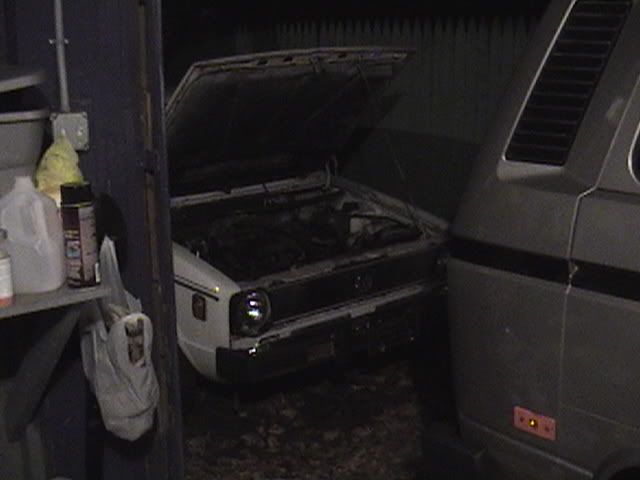
I had some concerns about the body, most notably the obviously Swiss-cheesed floor. I made an offer, contingent on the seller driving the car to my house for me. He agreed, and we made a deal. A few days later, the Rabbit was sitting in my driveway:
You'll notice the hood is up. The car had a parasitic power drain that killed the battery if it was left hooked up.
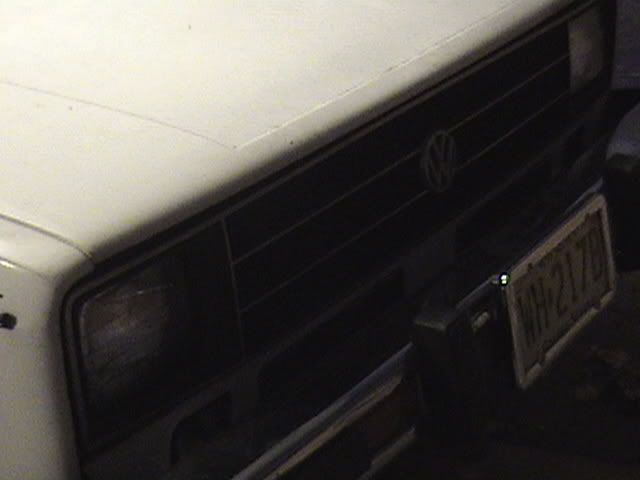
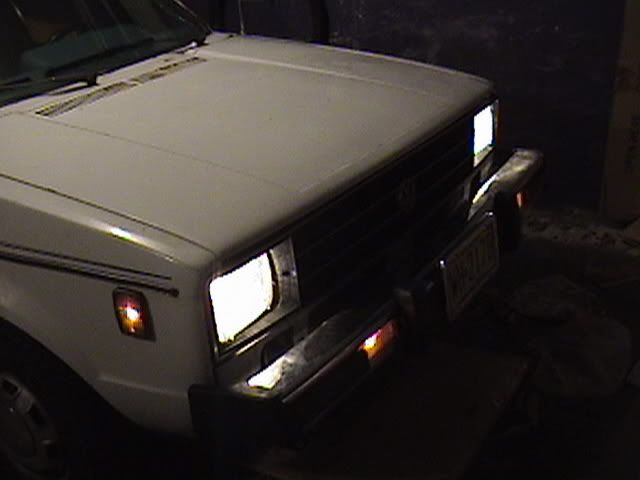
VW nerds will also note the incorrect round headlights. At some point in the past, someone had removed the square headlights and grill and replaced then with rounds. They hadn't changed the radiator core support body panel, though, so there was a gap underneath the grill. I found a VW parts packrat locally and bought a correct 1980 Westmoreland grill complete with square headlights and headlight buckets:
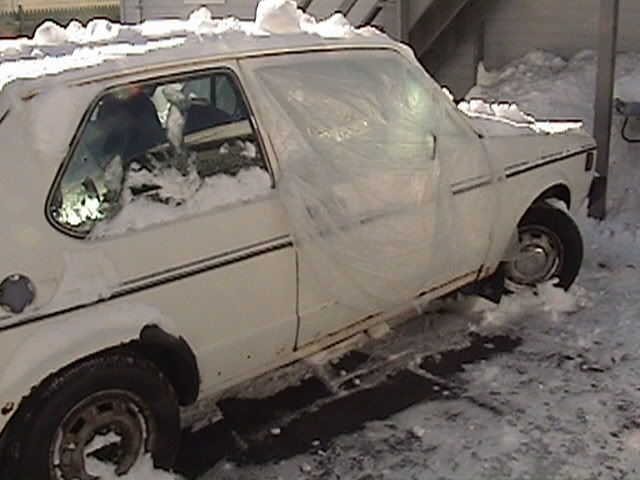
I didn't do much else before the winter. The Rabbit mostly sat out in the ice, with a piece of plastic over the broken quarter window (which I later replaced):
Long story short, the car had a metric ton of problems. In the spring, I rebuilt the vacuum pump and got the brakes working marginally better:
Even as the car's problems kept snowballing, I kept working. At one point, I had given the car a proper name, but soon started referring to it as "Little F*cker", which eventually took over as its name. In April, I reluctantly sold the 1981 240D, partially so I could concentrate on the Rabbit. I started in on the Rabbit's body issues in late spring. Here, you can see some weird blue primer applied by the previous owner to cover some rust:
The worst part was the car's floor. I thought I could fix it, like I did with the 240D, but it turned out to be much more difficult to repair, due to the way the Rabbit was constructed. Finally, one day in June, I hit my breaking point. One Saturday afternoon, while working on the Rabbit, I threw down my wrench on the garage floor, marched in the house, conceded defeat, and posted the car for sale on Craigslist. I removed the Greasecar kit and sold that separately. In all, I got most of my money back and the Rabbit, and it went to an enthusiast.
If the car had been in better shape to begin with, I might have enjoyed it. I did enjoy the several test spins I took around the block. It was fun to drive. But, in the end, it was way too far gone for my taste. For all I know, though... it might still be out there.